[
This post may contain affiliate links. We may earn money or products from the companies mentioned in this post.
So you have a new dog or puppy. Congratulations!
Or, perhaps you want to train an older adult dog and you’re wondering what dog training commands you should teach.

Dogs of any age who are healthy can learn dog training commands. An “old dog” can learn new tricks!
What Are Dog Training Commands?
Commands are a way of communicating with your pup. They help teach him the rules and what’s expected of him.
Commands can come in the form of verbal commands or in the form of hand signals. Dogs read our tone and body language.
They can learn many words when taught what they mean. One of my dogs even learned to perform different behaviors for over 170 words.
Consistency in using the same words—cues—is important or the dog will get confused.
Using consistent hand signals can also be taught. Hand signals can be useful as they often can help a dog pay more attention to the training.
They’re crucial in training deaf dogs too.
One of my senior Shelties became deaf at around 14 years old.
Because she knew hand signals and to watch for them, I was able to take her places and knew she would respond even off a leash.
Hand signals also are useful for training in loud environments and for distance work.
Dog training is a little bit like stacking blocks. The more a dog learns, the more he can learn.
For more detailed information on raising and training your dog, check out our puppy training 101 page.
Why Should I Train My Dog?
Training builds the bond with your furry best friend. It also helps teach him the rules and what’s expected. It teaches him to follow what you say.
A trained dog is a pleasure to live with! He can accompany you to a friend’s house. To the beach. Or to the pet shop.
You won’t be dragged down the street. You’ll see your friends more often because they won’t be knocked over when they enter your house.
Your pup won’t be locked in another room while you eat. Your couch won’t become a chew toy.
Training also helps your pup get some impulse control. He’ll learn to get some self-control as he learns the commands.
Impulse control helps your pup be successful in all types of settings.
Dog training commands are great for young puppies or young dogs who often have little to no impulse control.
The benefits of training are infinite!
QUICK RECOMMENDATION: If you’re looking for a good book about training your puppy check out The Puppy Primer. It sets a great foundation for both the new puppy or dog owner.
What Dog Training Commands Do I Need?
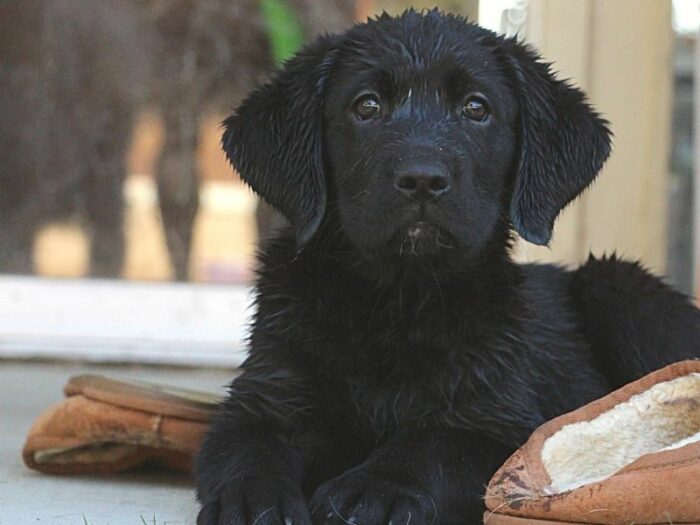
Some basic dog commands will really help your day-to-day life. As a dog trainer, there are certain commands I recommend for every dog.
Once your dog has mastered the basic commands, the sky’s the limit!
In fact, one of our favorite local dog obedience schools requires basic obedience level 1 before going to any other class, but once you complete level 1 you’re welcome to attend any advanced training class including agility, sport dog, nose work, etc.
The below list starts with some commands that are basic, such as paying attention or sitting, and goes through more advanced commands like take it/hold it.
You can show your dog how to do tricks like speaking on command.
Or the useful trick of going to a dog bed and remaining there while you eat, which solves begging from the table.
Or even to fetch a tissue or a newspaper for you.
21 Dog Training Commands
Here’s our list of 21 dog training commands that are important for every dog to know.
However, if you’re really interested in teaching your dog more advanced commands then check out our article about service dog commands.
Before we get started I’d like to make two recommendations.
- Get some high-value treats for training.
- Get a treat pouch.
- Our Favorite: We’ve used a half dozen different treat pouches and by far our favorite is the PetSafe Treat Pouch.
Without further adieu…
#1. Attention Command
Getting your dog’s attention is the foundation of all interactions with him. If he’s not paying attention to you, you’re just giving a command to the air. It can also help teach a new dog his name.
How Do I Teach the Attention Command?
- Say his name and, when he looks at you, mark the behavior you like by saying “yes!” and giving a small tidbit of a treat.
- If he doesn’t look at you, first show him the treat and hold it near your face. Say his name and treat and praise when he looks.
- Do the exercise a few times. You don’t want to bore him. End while he’s still happy and exuberant.
- You don’t have to hold the treat near your face forever. Once he gets the idea that looking at you is rewarding, you can just say the name or command and praise and reward.
- When he understands that looking at you is fun, then you can add a “look” or “watch” command.
#2. “Come” Command
This is one of the most important commands you can teach your pup. A reliable recall can save your dog’s life!
We all know of dogs who run the other way when called. It’s frustrating and embarrassing.
They’ll win the chase game. They have four legs and we have two.
One of my clients hired me because they lived on a busy street. Unfortunately, their prior dog escaped and was hit by a car. It’s heart-breaking.
They wanted to be sure that didn’t happen again. Their new pup learned to zoom toward them when called.
Their friends were impressed. And they were ecstatic and could trust that they wouldn’t lose their dog.
How Do I Teach the Come Command?
- In the beginning, show your pup a high-value treat. A small piece of chicken or a purchased treat that your dog can’t resist can lure even reluctant dogs. Some treats that worked great with my dogs: hot dogs, cheese, steak, and really stinky fish treats.
- Make sure you use something he really likes. Then, say his name and “Come!” in a happy tone.
- When teaching this, you can first show him the treat as a lure then give the command.
- Make it a party to come to you! Start with your dog on a leash at first. Once he learns it, use a long line. It’s a longer leash so that he can’t just run off. As in all commands, start without distractions.
- When he reaches you, mark the behavior. Say “Yes, good come!” Give him a jackpot of treats—means giving him three or four small treat tidbits in a row. We have to make coming to us more fun than all the distractions around us!
- After he starts coming reliably, stop showing the lure treat and just give the reward treat.
- I usually give three or four small treats in a row after the dog comes to ensure he’ll want to come the next time I call him. It’s called a jackpot!
- Once he realizes that this is really fun, he’ll start to come reliably. And your stress level will go down.
- NEVER call your dog to you and do something that he sees as negative, such as correcting him from jumping on a counter. That can be handled by teaching him “leave it.” Even putting him in a crate he likes or coming in from the yard can be a negative in this situation. His fun’s ending.
- Dogs are smart and they’ll remember and not want to come the next time if something negative happens immediately after they come to you.
- If he’s already learned not to come on the word “come,” don’t despair. You can train using a different word, such as “here.” Be consistent in the language used.
- You can even play games in the house, calling his name and rewarding him when he finds you.
- The “find me” game can be a lot of fun for a dog. But don’t play it too often—you don’t want to create separation anxiety.
QUICK RECOMMENDATION: This is the long line we use when teaching our puppies to “come” when called.
#3. “Leave It” Command
We’ve all had the dog that wants to scavenge and pick up food wrappers on a walk. Or the tempting roast on the counter.
It’s not only frustrating but can lead to a sick pup who gets into the wrong things.
So you need to teach your dog how to never grab that forbidden item when you tell him to “leave it.”
How Do I Teach the Leave It Command?
- You can hold a treat in a closed fist and say “Leave it.” Be patient.
- When the dog takes his nose off your fist, say “Yes!” and give him a treat from the other hand.
- Don’t give the treat he was sniffing, or he’ll learn to persist in getting the treat out of that hand and not give up.
- Another way to teach this command is to have your dog on a six-foot leash and hold it where there’s just a little slack, but the leash isn’t tight.
- Throw a treat about six feet away, well out of his reach. Make sure he sees you throw it.
- As it hits the ground, say “Leave it!” Be patient. When he stops pulling towards it and there’s slack in the leash, say “Yes! Good leave it” and give a reward from your hand.
- He shouldn’t get the treat from the floor or he’ll learn he can get the forbidden item you want him to leave.
- After he understands not to get the treat on the floor, start placing other items you don’t want him to get down with him on the leash as described above: your shoes, the television remote, and your new smartphone.
- You want him to generalize leaving anything you tell him to leave.
- Not only can this save you tons of money not having to replace these items, but once he’s trained, your dog won’t ingest things that may be harmful.
- You also want him to learn that certain items at different heights are forbidden. So train him by putting the items on a counter or table, for example, and perform the exercise as described above. It’s a win-win!
PRO TIP: When training our puppies and dogs we start off by using their kibble as treats. However, sometimes you’ll want to give a higher value reward. We already mentioned the Crazy Dog Train-Me Treats. The other treats we highly recommend are Zuke’s Mini Naturals.
#4. “Sit” Command
This is the first command that most people teach their dogs. A dog that will sit on command can’t jump.
You can greet people while taking a walk. Your neighbors won’t avoid you and cross the street. No muddy paws on your new shirt after your dog reaches you.
It will get some impulse control in all settings…
How Do I Teach the Sit Command?
- After your dog has had a sufficient amount of exercise, hold a treat just above his nose and slowly move it backward. When his rear hits the floor, calmly say “Yes! good sit!”
- If he jumps for the treat, you’re probably holding it too high or he’s too excited.
#5. “Down” Command
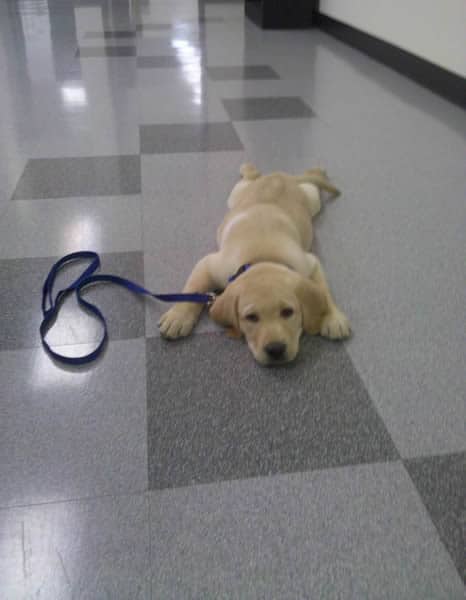
Once your dog can sit on command, you can teach him to lie down.
This command is different than “off” for jumping. It’s lying down flat, tummy and legs on the ground.
A dog that will lie down on command can be taught to go to a place like a dog bed and be calm.
He can accompany you to an outside eatery without stealing food. He’ll also be unable to jump on people or counters.
How Do I Teach the Down Command?
- Have your dog sit. Make sure he’s had a sufficient amount of exercise first. Then, put a treat right in front of his nose and slowly move the treat straight down towards the floor.
- Wait him out until he lies down.
- If he gets up or crouches, you may be moving the treat downward too quickly or he may be too energetic.
- As soon as his whole body touches the floor, calmly say “Yes, good down.”
PRO TIP: If you get too excited in your praise, he’ll pop back up.
#6. Loose Leash Walking
We’ve all seen the helpless owner being dragged down the street. This can be dangerous. Loose leash walking is an important skill for you and your dog to learn.
Not only can you get injured but you can also unwillingly let go of the leash and lose your dog.
One of my clients had been pulled over by her Alaskan Malamute and broke her wrist before she hired me.
Panicked, and not wanting to rehome her dog, she called me. Understandably, she teared up when she told me what happened.
We taught her pup to walk nicely on a leash. They could then take fun leisurely walks around the neighborhood. And the dog got more exercise too.
How Do I Teach the Loose Leash Walking Command?
- If possible, first have your dog exercised before practicing. Play fetch. Do some other training exercises first to stimulate his mind.
- It might seem silly to exercise your dog first because you’re probably walking him so he’ll exercise.
- But doing this extra step is prior to your training sessions. We’re setting him up to succeed.
- Having a calmer dog to train is especially important if you have a high-energy breed like a lab, a herding dog, or a terrier.
- You can still take your regular walks in between your training sessions. Have a short leash with some slack.
- Pick a side. You want to be consistent in which side your dog will walk on—your left or right.
- Have him sit or stand next to you. Give a treat when he is calm next to you.
- Choose what your command will be. Common commands are “let’s go” or “walk.”
- You can use “heel,” which technically is your dog walking with his shoulders by your left side.
- Say your dog’s name and then the command. Take a step with a treat in the hand next to him. Give the treat when he stays next to you.
- Take a few more steps, rewarding when he remains by your side.
- If he starts to pull, stop and wait until he comes back to you. Then start again.
- You can also make about turns, going in the opposite direction to help teach him not to pull. Praise and reward when he walks next to you.
- Anti-pull devices can help, such as no-pull harnesses. I’ve had success with properly fitting Easy Walk No Pull Harness or Freedom No Pull Harnesses or similar products. These two harnesses are generally better with dogs whose legs are proportionate to their body, like labs and Dobermans.
- Dogs with shorter legs and long bodies may be able to slip out of these harnesses. For dogs with shorter legs and longer backs like Shih Tzus, an anti-pull harness like the Easy Walk can be very effective. The Sporn can also be effective for larger breeds like labs.
- In addition to the treat, mark the desired behavior by saying “Yes! Good, let’s go!”
#7. “Wait” Command
This command can stop your dog from darting out the door. Most dogs are so excited when a door opens, that they want to run outside to see where the fun is.
But this can be disastrous. Your beloved pet may run into traffic or get lost.
If he’s trained to wait and not run outdoors or even to wait at curbs when he’s on a walk, those nightmare scenarios won’t occur.
And your walks will be more pleasant.
A “wait” command is used in various ways by different trainers.
Generally, it’s used as a pause in which the dog doesn’t move forward but, unlike a stay, doesn’t have to remain in a certain position.
So, you can even use it to stop your pup from coming out of your car by saying “wait” before attaching his leash and then telling him to jump out of the car.
How Do I Teach the Wait Command?
- Have your dog on a short leash with some slack and stop and say “Wait.” When your dog stops pulling and is next to you, reward and praise.
- Make sure that he calms down for at least a few seconds before moving forward again. Make him wait longer periods as he’s able to before moving forward.
- Before you move forward, give him his motion cue, such as “Let’s go.”
- Repeat this exercise a few times and, after a few successful tries, move on to another exercise. Or end the training session and play with your pup as a reward so he’ll look forward to the next training session!
#8. “Settle” Command
This is another impulse-control exercise that can make it a pleasure to be with your dog. Dogs can, like people, become overly excited.
But, unlike people, they usually jump, tear clothes, and wreak havoc when over-stimulated. So it’s useful to teach them to settle down.
It helps if they’ve had enough exercise before practice. Once they learn what “settle” means, they can perform it on cue.
I’ve found that teaching a puppy to settle can really help the pup have some impulse control.
When my Lhasa apso was a puppy, he often was over-stimulated by many things.
Teaching him a “settle” command was very helpful in his being able to calm down, to the point that he became naturally calmer in those settings.
You want to make sure that the bed that you use to have your dog settle in is large enough for him to lie down on comfortably.
How Do I Teach the Settle Command?
- Have your pup on a loose leash and when he lies down, tell him “settle”, calmly praise him, and give him a small treat.
- This is different than teaching him to lie down on cue. In teaching “settle”, the dog should be rewarded whenever he is calm on his own. You want him to understand that being calm is what’s being rewarded.
- You can toss the treat to him if it lands close enough and doesn’t make him get up.
- Eventually, you can say “settle” and he’ll do it on command.
#9. “Stay” Command
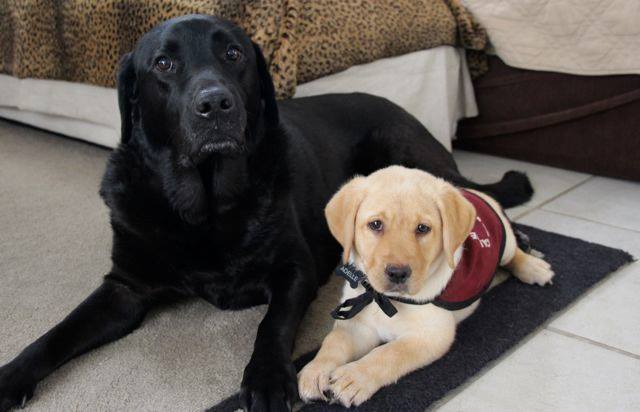
After a dog knows the “sit” or “down” commands, you can start teaching him to remain in those positions.
Stay means to remain in exactly the same position, without turning around or moving up.
You want to teach him not to edge up or crawl away.
After he can stay, you can teach him to stay on a dog bed or even in a down when you’re out with him at an eatery.
How Do I Teach the Stay Command?
- There are the “three D’s” in teaching this: Distance, Duration, and Distraction.
- It’s best to first start with duration. Have your dog nearby you in a sit or down and tell him to “stay.”
- You can also put your hand in front of him, palm side, fingers facing down as you give the command to help reinforce the “stay.” Don’t expect him to stay for too long. Even a few seconds is an accomplishment.
- Build time gradually over training sessions. Patience is necessary.
- Vary the amount of time you make the dog stay. Start with a few seconds, then go to 15 seconds, as the dog’s able to handle it.
- Vary from shorter to longer to shorter times so that the pup understands what you want rather than just anticipating the time required.
- You always want to release the dog from the stay. Staying has no meaning if there’s no beginning or end.
- You can teach him a release word when it’s alright to get up. Say something like “break.”
- When he gets up, say “Good break,” but don’t make that more rewarding than the stay.
- After he learns to remain in a stay, you can start to take a step away then return to him and release him.
- Add distance as he’s able to handle it. Always return to the pup and release him rather than calling him. Once he’s reliable, you can add distractions.
#10. “Take It” And #11. “Hold It” Commands
This is a great command for teaching a dog to fetch. It’s also useful for practical things like fetching the television remote or a can of soda.
You can also have the pup perform other tricks by taking and holding things. I taught this to many dogs, including my golden retrievers.
Though they naturally retrieved, I wanted them to take items on command.
How Do I Teach the Take It and Hold It Commands?
- Hold a favorite toy right in his reach. He should automatically want to grab it. If he doesn’t, try to make it more alluring, by squeaking it or waving it back and forth.
- The second he grabs the toy, praise him with “good take it.” You can give him a small treat too, but then he’ll drop the toy.
- Of course, it’s important to teach a dog to drop or give up an object on command.
- Have him hold the toy longer times before he releases it. After he understands taking and holding various toys, have him take and hold other safe objects.
#12. “Drop It” or “Give” Commands
We all know a dog that tugs with all his might. He grabs your hat and runs off with it. When you try to take it, his teeth clamp down until your hat is in shreds.
Teaching a dog to give something up solves that problem and can help teach them not to guard the object.
How Do I Teach the Drop It or Give Commands?
- After you hold a favorite toy in front of your dog and he grabs it, have a great treat ready in the other hand to exchange for it.
- Show him the treat. Immediately say “give” while holding the other end of the toy. Praise “yes” and reward with a small treat when he releases it to your hand.
- To teach him to drop the toy to the ground, don’t hold the other end and say “drop” as you show him the treat you’ll exchange for the toy. Praise and reward when he drops the toy to the ground.
- It’s useful to teach both commands. You never know when your dog will have something in his mouth that you’ll need him to immediately spit out.
QUICK RECOMMENDATION: Most of our puppies in training are Labs and Golden Retrievers who love to chew. One of our favorite toys is the durable KONG Classic which also works great when teaching your dog to “drop it” or “give”.
#13. “Place” Command
“Place” is a very useful command. You can tell your dog to go to a specific place, such as a dog bed.
When teaching it, it’s important to leave the bed in the same location so the dog understands what you want. On cue himself
It’s important to teach a down/stay along with this command, so your pup can lie on his bed while you and your friends munch some chips.
How Do I Teach the Place Command?
- With your dog on a leash, lead him to the bed and, when he stands on it, praise and reward.
- If he doesn’t automatically walk onto the bed, you can lure him onto the bed by putting a treat in front of his nose and he’ll follow the treat. When all four of his feet are on the bed, praise, and reward.
- Start adding a “place” command as you lure him, praising “good place” and giving him a treat when he’s on the bed.
- After he understands what place means, have him do a down/stay there.
- Eventually, if you’re consistent, he’ll be able to go to the “place” on cue himself.
PRO TIP: Check out our video teaching Raven to “Go To Your Bed” using the Carlson Portable Dog Cot as her bed. We did it a little differently than what is described above capturing and shaping her behavior using a clicker.
#14. “Spin” Command
Some dogs naturally go in circles chasing their tail. In this trick, you teach your dog to go around in a circle.
This is a fun party trick. It can also build a dog’s confidence and expend some of that extra energy.
How Do I Teach the Spin Command?
- Place a treat right in front of your dog’s nose. SLOWLY lure his body around in a circle. You’ll need to do a larger circle for a lab than for a Shih Tzu. As you lure, say “spin.” After a spin circle is completed, praise “good spin” and give a small treat.
- Remember to always lure in the same direction: clockwise or counterclockwise.
- You can teach the other direction separately by using another cue like twirl.
#15. “Catch It” Command
This is a fun trick. Your dog may become the next Frisbee champion! Not all dogs naturally catch an item.
I find the easiest way to teach this is to use a soft toy that your dog loves.
Most dogs love soft squeaky toys, but it’s important to have a variety of toys as dogs will sometimes get bored even with their favorite toys.
How Do I Teach the Catch It Command?
- Gently throw the toy right above your dog’s head, saying “Catch.”
- Make sure that your dog is paying attention before throwing the toy.
- Make a big fuss when he catches it.
- Once he gets the concept of catching something, you can have him catch other things, such as a small treat.
#16. “Speak” & “Quiet” Commands
Many dogs love to bark. They sound the alarm when someone’s at the door. They’re communicating with us. But constant barking is annoying.
So it helps to teach a pup to bark only on cue.
One of the breeds I have is Shelties, which is a very vocal breed. When they herd, they let a high-pitched wail accompany their work.
It was crucial that I taught them to only speak on cue so that I wouldn’t go deaf and so that neighbors wouldn’t complain.
How Do I Teach the Speak/Quiet Commands?
- When your dog barks once, capture that behavior and praise and reward with a small treat. If he doesn’t bark, you can try triggering a bark such as by ringing the doorbell or knocking at the door.
- The second he stops barking, tell him “quiet,” and praise and reward the silence.
PRO TIP: After training these commands, start really praising the quiet more than the speak command.
- At the end of the short training session, give your pup something to do, such as a stuffed Kong, so that he doesn’t continue barking.
- Always make him “work” for such goodies—that is, perform a command first. I recommend the black Kongs for strong chewers. There are other strengths for regular chewers and softer ones for puppies and seniors.
#17. “Count” Command
When your dog knows how to speak and be quiet on command, you can have him “count.” This is a neat party trick to impress your friends.
How Do I Teach the Counting Command?
- Ask him to count to five. Give him his “speak” cue, then, after five barks, use your “quiet” cue. To be less obvious, you can add a hand signal to the “speak” cue, such as pointing at your mouth.
- Then you can add a hand signal for your pup to stop barking, such as placing a finger in front of your lips.
- When the pup knows the hand signals with the verbal cues, you can eventually fade out the verbal cues and use only the hand signals, so that the audience is more impressed with your pup’s mathematics skills.
#18. “Shake” and/or “High Five” Commands
Everyone’s impressed when a dog high-fives on command. It’s best to teach this after your dog already knows how to sit on command.
How Do I Teach the Shake Hands/High Five Command
- As long as your dog is good with handling, you can gently take his paw and lift it up off the floor. Say “shake hands” or “high-five” and treat. Do this three times in a row.
- If he starts lifting it on his own, use your command cue and praise and treat.
- Another way to try it is to gently tap behind his elbow while giving the command cue. Praise and reward when he lifts his paw.
- Eventually, with consistent training, your pup should begin lifting his paw up on its own on your command cue.
#19. “Wave” Command
Your friends are visiting you. As they are departing, you can have your pup wave goodbye. They’ll be so impressed that they won’t want to leave.
Once your dog knows how to shake hands/high-five, you can teach him to wave.
How Do I Teach the Wave Command?
- Tell your dog to high-five on cue. Catch the paw as you normally would the first few times. Then, give the cue without catching the paw.
- After he gets the idea, start adding a new verbal cue, such as “wave.” You can even add a hand signal by waving at the dog when you say it.
- Eventually, you’ll be able to wave and your pup will wave back! I taught this to a rescued dog I have, and everyone was impressed when I’d wave at him and he’d wave back.
#20. “Crawl” Command
This trick can be a show-stopper. With any trick, it’s often what you say that makes the trick seem polished. You can say something like “Crawl like a bug.”
After your dog knows a solid down command, you can teach him to crawl.
How Do I Teach the Crawl Command?
- Have your pup in a down and place an alluring treat right in front of his nose.
- Move the treat along the floor about one inch away from his nose. Tell him to crawl.
- Praise and reward with the treat when he moves slightly forward.
- Over time, you can add distance and have him crawl by using the treat to lure him forward.
- After he crawls a few inches, start just giving the verbal cue without the treat lure. Don’t stop luring with the treat until he really understands what crawl means.
- Eventually, he’ll learn to crawl without the treat lure if you’re consistent in your training.
#21. “Touch” Command
This is a command where you teach your dog to touch his nose or foot to an item. It’s called targeting. It’s useful to teach dogs to touch your hand.
It can teach a dog to pay attention to you. It can teach a puppy to be gentle with hands.
How Do I Teach the Touch Command?
- Have your dog in a sit position and put your hand about an inch in front of his nose. Your palm should be facing his nose with your fingers pointing to the floor.
- When your pup reaches with his nose towards your hand, say “touch” and praise (“good touch”) and give a small treat when his nose gently touches your hand.
Tips For Teaching Dog Training Commands
- Train in short sessions, no more than 15 minutes per session about 3 times per day.
- Don’t do too many repetitions of each command.
- End on a happy note.
- Start sessions without distractions, adding them after the dog understands the command.
- Teach them what “good” means by using a happy voice.
- Exercise your dog before training to set him up for success.
- Use positive reinforcement that your dog likes: treats and praise.
- Make sure your dog is hungry and don’t train right after he’s eaten.
- Be consistent in the methods and commands you use.
- Timing’s important. Make sure that you praise and reward immediately after the dog performs the desired behavior.
- Have your reward treat ready when you mark the behavior you want to reward
- Make your pup “work” for everything. He must perform a command before getting a toy, treat, or chew toy.
Dog Training Commands – Quick Recap
We made a few recommendations throughout this post.
Here’s a quick recap of some things you might want to get before you start teaching these important dog training commands.
Essential
- Treats – for the past 15+ years, we’ve been treat-training our puppies. Our current favorites are Crazy Dog Train-Me Treats and Zuke’s Mini Naturals.
- Treat Pouch – you could use your pockets but if you have a forgetful mind like mine and a dog like Stetson then your dog will chew through your pants pockets to get to the treats you left in your jeans. Our favorite is the PetSafe treat pouch.
Still Important
- Dog Toys – If you have destructive dogs like mine then get something durable. Two of our favorites are the KONG Classic and the heavy chewer KONG Extreme.
- Dog Bed – You can use a blanket or mat similar to what’s in your bathroom. As I mentioned earlier we taught Raven to go to her bed using the Carlson Portable Dog Cot.
- Clicker – We clicker trained Raven, Archer, and Elsa. Any clicker will do but the one thing we prefer is to get one that has a fancy attachment like this Dog Training Clicker.
- Harness – We prefer the Easy Walk No Pull Dog Harness. Linus, Stetson, Raven, Archer, and Elsa have all worn the Easy Walk Harness.
- Book – If you are looking for a good foundation for your dog or puppy then we highly recommend The Puppy Primer.
Final Thoughts
These are 21 dog training commands we like to teach most of our dogs and puppies.
However, it’s not important that you teach all of these commands what is most important is that you exercise you remember it’s not just about exercising your dog’s body, but his mind as well.
Also, if you want a real challenge you might consider teaching your dog these service dog training commands.
What dog training commands have you taught your dog?
Are you having trouble with any part of your dog’s training?
Tell us about your experiences in the comment section below.
Related Article:
Save To Pinterest

UPDATE: This post was originally published on May 1st, 2022. We periodically update blog posts with new experiences and information to keep them as relevant as possible.
Top Picks For Our Puppies
- BEST DOG CHEW
We Like: Beef Collagen Sticks – All of our pups love to bite, nip, and chew. We love using Collagen Sticks to help divert these unwanted behaviors. - BEST PUPPY TOY
We Like: Calmeroos Puppy Toy w/ Heartbeat and Heat Packs – Perfect for new puppies. Helps ease anxiety in their new home. - BEST DOG TREATS
We Like: Crazy Dog Train-Me Treats – We use these as our high-value treats for our guide dog puppies. - BEST FRESH DOG FOOD
We Like: The Farmer’s Dog – A couple months ago we started feeding Raven fresh dog food and she loves it! Get 50% off your first order of The Farmer’s Dog.
Check out more of our favorites on our New Puppy Checklist.